
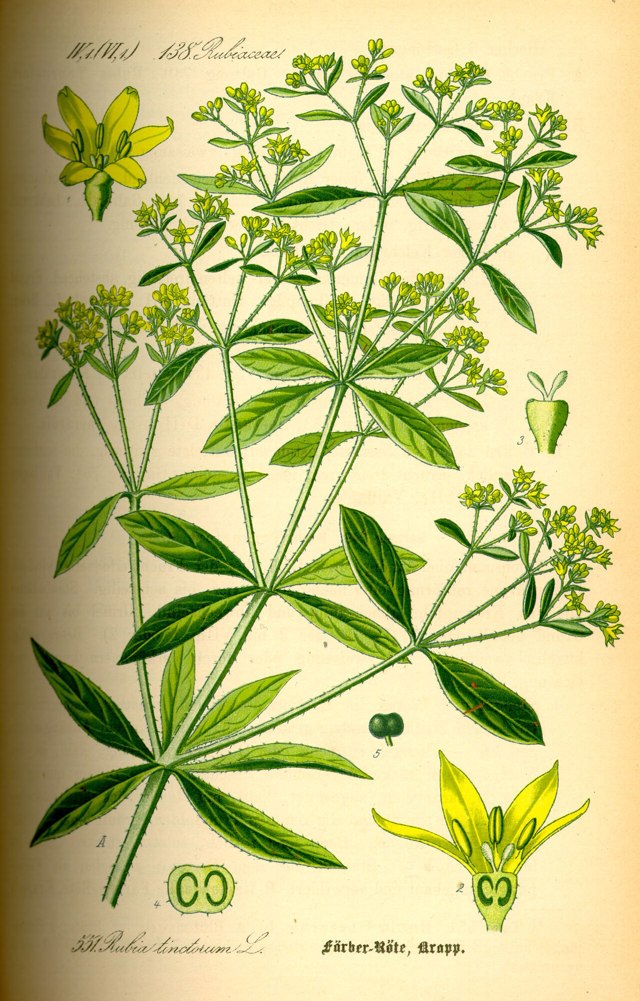
For centuries madder was the great red of European cloth. The dye comes from the roots of Rubia tinctorum, and depending on how it is handled it gives everything from pale salmon through brick-orange to a deep, warm rose. It is also one of the most forgiving natural dyes to start with, and it works beautifully on wool.
Before you start: safety
Keep a set of equipment for dyeing only: a large stainless steel or enamel pot, a thermometer, long spoons or tongs, measuring jugs and rubber gloves. Never use it for food again. Work somewhere well ventilated, keep mordants and dyestuffs labelled and out of reach, and wear gloves when handling wet fibre.
Mordanting the wool
Madder needs a mordant to bind to the fibre, and alum is the traditional choice. Weigh your dry wool first, because every quantity is worked out from that weight. Around ten per cent of the dry weight of wool in alum is a common starting point, dissolved in hot water and added to a pot with enough water for the wool to move freely.
Add the wool, wetted out beforehand, and bring the pot up slowly to a gentle simmer. Hold it there for about an hour, then let it cool in the pot. Slow heating and slow cooling are what keep wool soft; sudden changes of temperature and too much stirring will felt it.
The dye bath
For strong colour, use roughly the same weight of madder root as dry wool; half that will still give good, softer shades. Soak chopped or ground root in water overnight, then add it to the pot, either loose or tied in a muslin bag to keep the fibres clean.
Keep madder warm, never boiling. Too much heat turns your reds to brown.
Heat the bath slowly and keep it warm rather than hot: somewhere around sixty to seventy degrees Celsius is a good range. Add the mordanted wool, hold the temperature for an hour or two, then leave everything to cool overnight. Much of the colour develops during that long, gentle soak.
If your tap water is very soft, a small pinch of chalk (calcium carbonate) in the bath often brightens the reds. Hard water does the same job on its own.
Exhaust baths
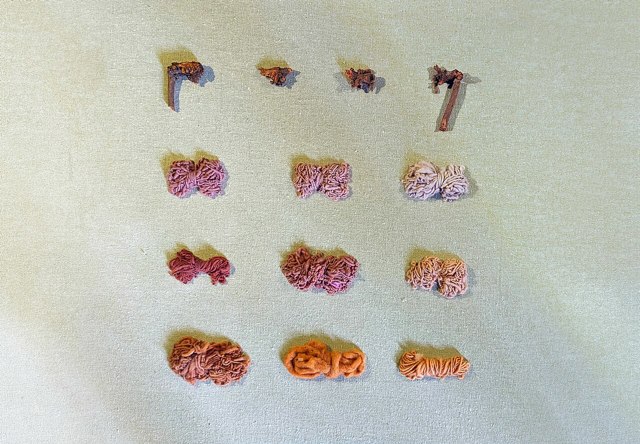
A madder bath is rarely spent after one batch. Put more mordanted wool into the same bath and you will get lighter oranges and pinks; a third batch gives soft peach. Dyeing several skeins in sequence from one bath is an easy way to make a matching set of shades for trim, guards and linings.
Rinsing and caring for the colour
When the wool is cool, rinse it in water of the same temperature until the water runs clear, then wash gently with a mild wool wash. Dry it out of direct sun. Madder-dyed wool is very lightfast once it is properly set, and it fades gracefully over the years rather than suddenly, which is exactly what you want from clothes you will wear for many faire seasons.


