
A portrait is not a photograph, and a sitter in 1590 was not dressed for comfort. Everything in the frame was chosen: the fabric, the jewels pinned along a sleeve, the angle of the ruff. That makes portraits wonderful evidence and dangerous patterns. Read them in layers and most of the guesswork falls away.
Start where the painter started, close to the body. The linen smock rarely shows except at the wrist and neck, but its cuffs and collar tell you whether the sitter wore a separate ruff or a falling band, and that decides how you finish the neckline of everything above it.
Work from the inside out
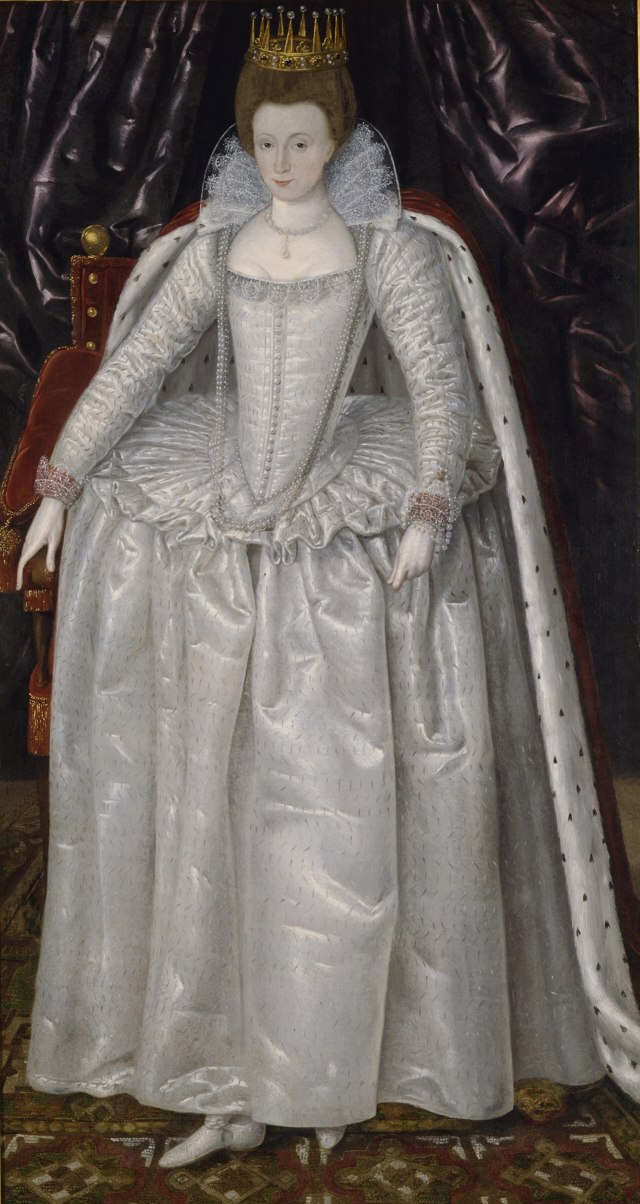
Next comes the support layer: the bodies, or a stiffened kirtle bodice. You will not see it, but you will see its effect in the long, flat line of the front. If the bodice in the painting has no wrinkles at all, assume structure underneath and plan for it before you pick a gown fabric.
If the bodice in the painting has no wrinkles at all, assume structure underneath.
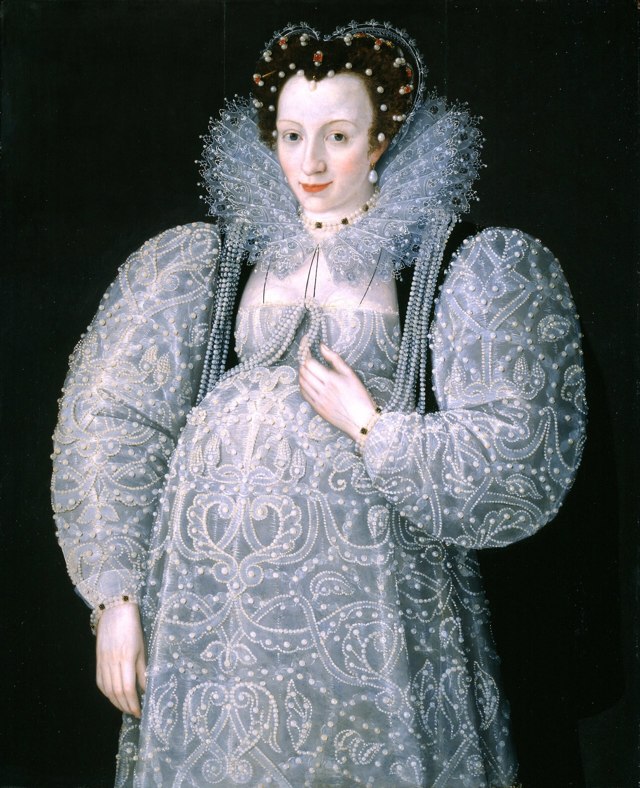
Below the waist, look at the silhouette before the decoration. A skirt that drops straight from a wide, flat shelf at the hips is sitting on a wheel farthingale, often with a padded roll beneath it. A skirt that flares in a smooth cone from a narrow waist is the earlier Spanish farthingale. A soft, rounded fullness at the back usually means a bum roll and nothing more. Each one is a separate garment to make, and each changes how much fabric the petticoat and gown will need.
Then find the petticoat or forepart. Where a gown opens at the front, the panel showing through is often a forepart: a richly decorated piece tied or pinned over a plainer skirt, so that the expensive fabric only goes where it can be seen. If the visible panel matches the sleeves but not the gown, that is a strong hint you are looking at a forepart and a matching pair of sleeves made as a set.
Sleeves, joins and pins
Sleeves are the most changeable part of the outfit, and often a separate garment, tied or pinned at the shoulder and hidden under wings or a roll. Look for the join. A row of aiglets or a jewel exactly where the shoulder seam should be is usually a fastening, not decoration.
Pins are everywhere in these paintings once you start looking for them. Ruffs, veils, partlets and even sleeves were pinned into place each morning, which is why a portrait can show a perfectly smooth arrangement that no amount of stitching would hold. If you cannot see how something stays put, the answer is very often a pin you are not meant to see.
Paint versus cloth
Painters had their own conventions. Gold embroidery might be suggested with a few confident strokes rather than counted out stitch by stitch, and the most expensive part of an outfit was sometimes painted with the most care. Use the painting for shape, layering and colour relationships; use surviving garments and inventories for construction. Where the two disagree, trust the garment that survived.
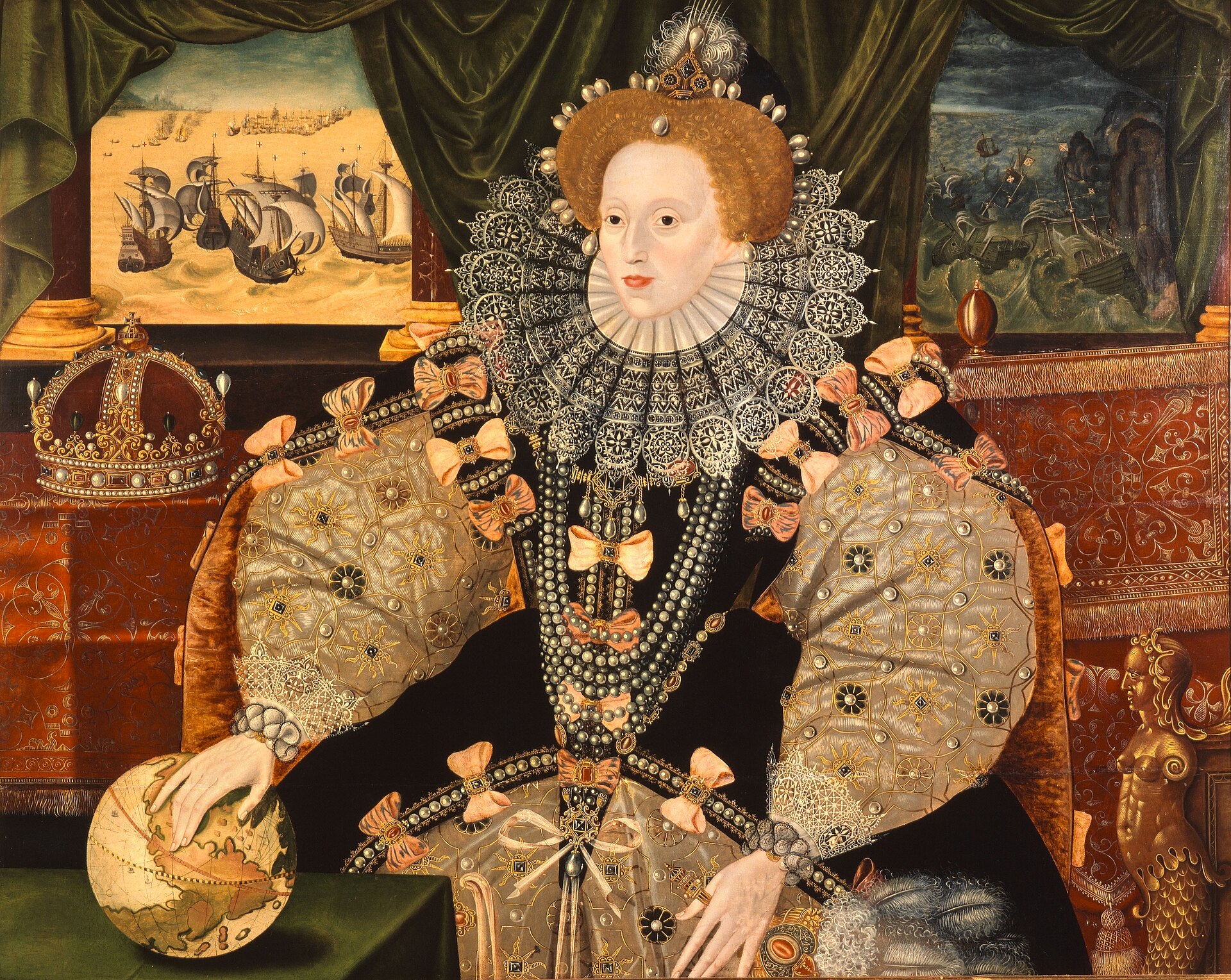
The Armada Portrait of Elizabeth I, 1588: a wheel farthingale, pearl-sewn gown and vast sleeves. Nearly every element here is a separate garment.
Write the list
Finish with the gown, the ruff and the accessories, and write each one down as its own line on your pattern list. By the end you will have six or seven garments, not one dress, which is exactly how the sitter would have described it.
A typical list for a 1590s gentlewoman looks something like this: smock, bodies, farthingale and roll, petticoat, forepart, gown, sleeves, ruff or partlet, and a headdress. Start at the top of the list and work down. Each layer you finish makes the next one easier to fit, and makes the portrait easier to read the next time you look at it.


